Thursday, 30 May 2013

Thursday's Random Thought (Mixed Messages)

I don't often go to the grocery store on Friday because it is always busy, and invariably, that's the day that they decide to only have three of the seven available cashiers working at the same time.  Don't even get me started on that topic!  However, this week I had no choice.  I had a pretty full weekend agenda and desperately needed a few essentials.  So off I went to my neighbourhood grocery store - after work - at 6:00 p.m. on Friday evening.

I finished my trip up and down the aisles, double checked my list to make sure I hadn't forgotten anything.  As much as I hate to admit it, unless its same old/same old for the week I now have to resort to making a list if I am planning to purchase anything out of the ordinary.  If I want to try a new recipe that calls for something not in my pantry I have to write it down!  I have been known (on more than one occasion) to go to the store for something, spot some specials, leave the store with three grocery bags and when I got home realized that I had not purchased the item I went in for in the first place.

I'm getting off track here ...

So back to the grocery store on Friday evening ...

As I am standing in line at the check out I glance at the selection of magazines on display (really - what else is there to do?) and not for the first time notice the mixed messages they are sending out in full living colour.  I am all for getting healthy eating and dieting information for many different sources.  After all what works for one person does not necessarily work for another.  And, who knows, there might be something there that speaks to you and sparks your weight loss journey.  But is it absolutely necessary to promote the newest diet breakthrough, the latest weight loss success story or the revolutionary discovery by Dr. Oz side by side with a mouthwatering picture of the most decadent chocolate cake in the history of cakes?

I ask you - How am I supposed to concentrate of healthy choices when my arch nemesis is mocking me from the cover of Woman's World weekly?  I don't mean to pick on Woman's World Weekly (it really is a pretty good magazine otherwise) because WWW is not the only magazine that commits this faux-pas on a regular basis, but it is unfortunately the most blaring example out there.

Just a few examples for you amusement and edification:

According to the cover in the following issue, I can "lose 6 lbs. this week" AND I "can eat my way happy".  Well, if I really want to ponder on that statement I have already been trying to "eat my way happy" and that's precisely why I need to lose 6 lbs. this week!
  

The next example offers me the secret to a juice that can "melt belly fat".  I suppose it will go very well with the offer of "guilt-free cupcakes"?  Of course if neither one of those options satisfies my cravings I can always resort to the "No-bake Summer Bliss".


And then there is the "European Obesity Cure!" ... maybe so ... but depending on my mood those words are going to go totally unnoticed next to the pictures of the "Summer Yummy".


This cover promises to reveal the "Biggest Loser secrets".  If you really want to know the secret I can share it with you and save you the price of the magazine ... the real secret is she did not eat the "Cheesecake Bliss" pictured (appropriately) right next to her hips. 


This next cover really packs a wallop!  Not only can you learn to "lose 10 lbs. a week" (a pretty unrealistic and I would think unhealthy way of setting yourself up for failure) but you can find out about a "fat burning tea" and ways to promote "anti-aging".  And if all of that doesn't work for you, you can look down a little further on the cover and learn that it is possible to take "Shortcuts to happiness" by apparently eating cake and cookies.


I could go on and on, but I think you get the idea.  And let me say right here, I totally understand that magazines are published not only to appeal to a wide range of readers, but also to impart as much interesting information as possible and let's face, to make money.

And yes, I also understand that I can buy the magazine, simply read the articles that appeal to me and skip the rest.  But I dare you to page through a magazine sometime when you are waiting in line at the grocery store (just ignore the nasty looks the store manager gives you when you put it back on the rack) every other page has a beautiful full colour illustration of scrumptious looking food.  I don't know about you, but my will-power is not always running at full throttle and just seeing those pictures is enough to trigger my body into full craving mode.  Not to mention that the pictures are always accompanied by words such as "Bliss", "Yummy" and "Happiness".

I don't need the mixed messages to be the extra test of my stamina!  Do you?

Sunday, 26 May 2013

The Flu! A Movie. Eating Tissues?


I haven’t posted here for quite some time now.  I just haven’t been up to it … I somehow got a particularly horrible viral flu that put me flat on my back for the better part of a week and then it took me a couple more weeks to shake off the residual effects and get through the things I HAD to do every day.  There was just nothing left in me at the end of any given day to sit down and put words on a page in a somewhat comprehensive manner.

I won’t bore you with all the details – ICKY - suffice it to say that I do not recall EVER being quite THAT sick as an adult! 

When I finally decided that “toughing it out” was not the answer and got myself to the doctor – who promptly ordered lots of fluids and bed rest (translate that as “sorry, its viral so there’s nothing I can give you to make you all better”) it was the Thursday in April that Boston police had the shootout with the Boston bombing suspects.  The next day, as I slipped in and out of what seemed like consciousness but was actually sleep (yeah, I was really that sick) the television was on and I saw most of the CNN coverage of the manhunt for the younger Tsarnaev brother.

Being an avid reader I usually do not watch much television, but reading becomes an impossible chore when your head feels like it is full of concrete and your stomach rolls in objection to every movement.  So, I resigned myself to watching television and became quite addicted to CNN.  I am now very well versed in the details of the Jody Arias case, the Boston Bombing, the West, Texas fertilizer plant explosion, saw the Amanda Knox interviews and witnessed the rescue of the three female hostages in Connecticut.

I finally worked up the fortitude to reach for the remote control without both my head and my stomach revolting against the movement so I switched to watching movies.  The first one I came across was “The Devil Wears Prada”.

Trivia Tidbit:  Although the movie is set in the fashion world, most designers and other fashion notables avoided appearing as themselves for fear of displeasing U.S. Vogue editor Anna Wintour, who is widely believed to have been the inspiration for Priestly.  Still, many allowed their clothes and accessories to be used in the film, making it the most expensively costumed film in history.  Wintour later overcame her initial skepticism, saying she liked the film and Streep in particular.  (source:  Wikipedia)

I really am getting to my point, so bear with me here.

Anyone not familiar with the movie should know that it revolves around publishing “Runway”, a fashion magazine and image is very important theme.  As the Anne Hathaway character moves from being a normal (minded and sized) young woman looking for a job to being a magazine size-appropriate member of the publisher’s team many issues about body image are brought to the forefront.  That’s not the basis of the whole movie, but it fits into the topic I am working towards here.  In one scene a young secretary (played by Emily Blunt) has been trying to diet down to a size zero in order to be able to attend the Paris fashions shows with the magazine publisher (played by Meryl Streep).  Asked by the Anne Hathaway character how she manages to stay so skinny, she replied, “I just don’t eat anything at all.  If I start to feel like I am going to pass out I eat a small cube of cheese.  I am just one stomach flu away from my goal weight.”

Stomach flu, okay that was funny.  Then again, feeling the way I did, not so much.  I didn’t really think about the impact my flu would have on my next TOPS weigh-in because I was too busy feeling sorry for myself.  I knew I was on the mend when I started to feel hungry (of course!) but I still couldn’t manage to keep anything down (of course!).   But obviously not eating any solid food would definitely cause the scale to go down.  It did - dramatically!  But I also found out it was only a temporary fix, since it evened out when I started eating normally again.

I’ve been thinking about various topics for a blog post, but kept hemming and hawing and procrastinating because I really didn’t feel I had anything interesting to write about.  However, that one line from the movie stayed with me …

“I am just one stomach flu away from my goal weight.”

There has always been a controversy about actresses, magazine and runway models giving young women – ALL women – a distorted idea of the ideal body type.  These super skinny, air brushed images are just too difficult to live up to for the ordinary person, never mind someone who already has body and weight issues.  It’s enough to send anyone over the edge.

I really shouldn’t limit this to women as men are bombarded with perceived perfect body images too.  That elusive six-pack is always apparent when a male model or actor removes their shirt.

Trivia Tidbit:  As hard and long as Gerard Butler worked out before the filming of 300, he could never achieve the abs he wanted.  The solution was simple.  They applied body make-up to make up for what he could not naturally achieve.

So for all you guys out there, if you don’t mind getting make-up on the inside of your shirt, you too can have perfect six-pack abs.

Yes, although generally referred to in the context of the female population eating disorders, fad diets and body image issues are cross-gendered.

Today I spotted a little headline on my YahooNews page that immediately caught my attention.  The headline read “Eating Tissues: Ex-Vogue Editor Reveals Models’ Secrets”.

Kirstie Clements, a top editor of Vogue Australia magazine for thirteen years, has written a new book titled “The Vogue Factor”.  It is an account of her time in the magazine industry and she reveals not only some of the behind the scenes tidbits about publishing a fashion magazine but also some of ugly details about the extent that fashion models will go to in order to achieve that perfect (??) silhouette.  On “Entertainment Tonight” (May 22, 2013) Ms. Clements recalled one season when the models were particularly thin.  “I was having dinner with a new York agent who told me that a few of the girls had resorted to eating tissues.  I’d never heard of such a thing.  I said ‘Oh, what did that do?’  Apparently, they swelled in your stomach and made you feel full, and I definitely heard that some girls were unwell.  Over time, I did hear that.”  She also told “ET” that already slender models who aspired to becoming catwalk models in Paris were often expected to lose ‘a great deal of weight’ so they could fit into the sample sizes.  Runway models were typically thinner than the models that would appear in the magazine.

TISSUES??

TISSUES!!

Some other examples of extreme measures models would take …

- Models would undergo breast reduction surgery to look thinner.

- Models were hospitalized and put on drips because they had   starved themselves.

- Already thin models would starve themselves down two more sizes so they would be  cast in overseas shows.  The Vogue office would say she had to be “Paris thin”.

Paris thin, where have I heard that before?  Oh yeah, just like in “The Devil Wears Prada”.  “One stomach flu away from goal weight”.

Ms. Clement does state that “some girls do lose weight for shows in a healthy manner, or simply have a very thin body type.  During the “ET” interview Ms. Clements also said she feels like she was part of the problem, referring to the fashion industry’s habit of lauding the super-skinny model.  “To tell you the truth, I thought everyone was complicit in it”, she explained.

Another modeling insider, Cynthia Bailey - a model, star of Bravo’s “Real Housewives of Atlanta” and CEO of the Bailey Agency in Atlanta is quoted as saying she has seen models go through real extremes to avoid gaining weight but is surprised to see the measures made so public.  “I am a little surprised that a Vogue editor is speaking out about it because usually these are things that we just know about but we never talk about.”

Some critics have pointed out that Ms. Clements was fired in May of 2012 after 25 years at the magazine so this book revealing the “dirty little secrets” could just be a case of sour grapes.  Ms. Clements responded to these accusations on “ET’ stating that her book was not a “bitter expose”, but rather told the truth about what happen in the fashion publishing world.  “It’s honest and honesty.  It’s not bitterness.”

The newest editor-in-chief of Vogue Australia, Edwina McCann, told ABC News that she can only speak for the magazine as it stands today.  “We are vocal ambassadors for the message of healthy body images.”  I read that quote with more than a touch of skepticism.  When the magazine covers start to reflect her words, then I will start to believe it.  In the meantime I'll stick to reading books over magazines.


Although the portrayal of the industry is shocking I am certainly not surprised.  I wrote a piece on a similar subject several years ago, which only goes to prove that this issue has been around for a long time and frighteningly will probably be around for a long time yet to come.  Until everyone can agree that size two is not the normal (nor ideal) female figure we are condemning ourselves to a losing battle in the quest to be and eat healthy.  If anyone cares to read it, I will post it below.

Although we are all trying to live a healthier lifestyle and that includes eating properly, whether it be for weight loss or not and, for many of us that includes trying to coax those stubborn numbers on the scale down a little bit … my personal opinion is I’ll put up with the tummy rumbles, the cravings and the extra inches on my ass.  Hide the chocolate, pass the celery sticks and keep the tissues for the next time I have the flu!


As I mentioned above this is hardly a new issue.  For anyone interested enough to read on, this is something I wrote back in September of 2009.

PERCEPTIONS AND IMPERFECTIONS

Recently, when my home page popped up on my computer screen a link caught my attention.  It was entitled

 “MORE PLUS SIZE PEOPLE ON TV; PLUS SIZE FANS AREN’T SURE IT’S ALWAYS A GOOD THING”

I am one of those people who would never be described as petite or svelte or even thin.  I have always been “zaftig” or “rubenesque”.  In all honesty, I am a little tired of apologizing for it.

I am healthy and reasonably fit.  I come from a background where food was real and meals were enjoyed.  Admittedly looking back, some alternative choices could have been made but now I try to eat healthy.  But let’s face it – I love food.   And that old demon, chocolate, does whisper in my ear. 

I was thrilled, when a few years back, fashion runways agreed to ban models that looked anorexic.  As a woman and as a mother of daughters, that illusion of perfection was hellish to try to live up to. 

Television, being the primary source of entertainment for so many people, has always depicted girlfriends, wives and mothers as perfect role models.  In the opening credits of the show Mrs. Cleaver wore pearls and heels to clean her oven.  I wear what I affectionately refer to as “grubbies”.

Claire Huxtable was always impeccably dressed even in her own home.  When I get home from work I can’t wait to get out of “work clothes” and into “comfy” clothes be they sweats or jean and a tee shirt.

Jennifer Love Hewitt, star of Ghost Whisperer, had her picture all over the tabloid announcing how much weight she had gained … reality check here … a size two is NOT fat!

 When Roseanne hit the airwaves, there was finally a woman who was “plus sized”, but now she was portrayed as being slovenly, brash, ignorant and lower class than all those well dressed women who came before her.  Apparently there was no happy middle ground. 

So enter the 21st century and television that is suddenly filled with images of full-figured people, both real and fictional.

Hurrah you might say, but not so fast …

These full-figured people are not portrayed as healthy, successful, everyday people just living their lives.  These shows actually focus on their size.

MORE TO LOVE – twenty women ranging in size from 14 to 22 are guided through a “The Bachelor” type show trying to win the love of a man.  The man himself being 6’3” and 330 pounds.  The height and weight of the women, as well as that of the man flashed on the screen as they were being introduced in the first episode.

Yup – that takes all the focus off the body type!

DANCE YOUR ASS OFF – 12 contestants, weighing a total of 3,000 pounds lose weight through dancing.  Good for them for being ready to make a healthy change, but the focus is just a little different from that of “So You Think You Can Dance”.

DROP DEAD DIVA – a model wannabe dies and comes back as a plus size attorney.  Does that sound like a reward or a punishment?  Or a life lesson?

RUBY – tells the story of Ruby Gellinger who topped the scales at 716 and has now dropped to 350 pounds.  Ruby is an amazing lady, who has a sense of humor and who loves life.  But that takes a back seat to the scales in this show.  A very strongly emphasized side line to Ruby’s journey is that the “love of her life” left her, because she got too fat.  She wants to be loved unconditionally but now that she has lost a tremendous amount of weight, this man has waltzed back into her life and she has allowed him to!  I personally applaud her awesome effort and achievement and I hope she is an inspiration to many people fighting the same battle, BUT what kind of message is this relationship sending to the people watching the show … I am not worthy of being loved unless I am thin and perfect?

The September issues of fashion magazines are usually filled with pages upon pages of stick-thin models wearing the latest haute-couture for fall.  Would you expect a “normal” looking woman to be sitting in the middle of the magazine naked and exposing, dare I say, even showing off a “normal” body?  Glamour magazine did just that.  Twenty year old model Lizzi Miller who at a size 12 is considered a plus size model in the fashion industry.  (Puh-leaze!!!!

From the press release … “She is shown in a sideways pose, her arms covering her breasts, only the string of a string bikini visible at the waist. The shocker: Her belly hangs over the string and rests just a bit on her thighs.  Not only that, but she’s laughing AS IF SHE DOESN’T EVEN KNOW.  There’s a roll in her belly that looks like every woman over the age of 16.  And, there she is, looking happy and confident and like she loves life and like she’s the sexiest thing the world.”

Reaction to the photo has been overwhelmingly positive with comments like, “I am gasping with delight” and “I love the woman on page 194”.   My own comment … its about damn time!

So in light of all this, am I going to give up my gym membership … NOPE!

Am I going to give up my treadmill … NOPE!

Am I going to let my TOPS membership lapse … NOPE!

Am I going to continue to try for healthy meals … ABSOLUTELY!

Am I going to ignore the demon chocolate whispering in my ear … MOSTLY!

But I am also going to remember that I am 50 years old … age, gravity, child bearing and life have taken their toll.  Shirley Valentine had it right … they are the scars and lines of life and of a life being lived well.

Coincidentally, the following arrived in my email (as a joke) about the same time as I was reading these articles.  I thought it was apt but not necessarily funny.

Recently, in a large French city, a poster featuring a young, thin and tan woman appeared in the window of a gym. It said:

   ¨THIS SUMMER DO YOU WANT TO BE A MERMAID OR A WHALE?¨

     A middle aged woman, whose physical characteristics did not match those of the woman on the poster, responded publicly to the question posed by the gym.
 To Whom It May Concern:
     Whales are always surrounded by friends (dolphins, sea lions, curious humans).  They have an active sex life, they get pregnant and have adorable baby whales.  They have a wonderful time with dolphins and stuffing themselves with shrimp.  They play and swim in the seas, seeing wonderful places like ..Patagonia.., the Barren   Sea and the coral reefs of  ..Polynesia.. . Whales are wonderful singers and have even recorded CDs.  They are incredible creatures and virtually have no predators other than humans.
They are loved, protected and admired by almost everyone in the world.
Mermaids don't exist.
If they did exist, they would be lining up outside the offices of Argentinean psychoanalysts due to identity crisis.  Fish or human?  They don't have a sex life because they kill men who get close to them not to mention how could they have sex?  Therefore they do not have kids either. Not to mention who wants to get close to a girl who smells like a fish store?
The choice is perfectly clear to me; I want to be a whale.

    P.S. We are in an age when media puts into our heads the idea that only skinny people are beautiful, but I prefer to enjoy an ice cream with my kids, a good dinner with a man who makes me shiver and a coffee with my friends. 
With time we gain weight because we accumulate so much information and wisdom in our heads that when there is no more room it distributes out to the rest of our bodies.  So we aren't heavy, we are enormously cultured, educated and happy.  Beginning today, when I look at my butt in the mirror I will think,
"Good gosh, look how smart I am."


Friday, 12 April 2013

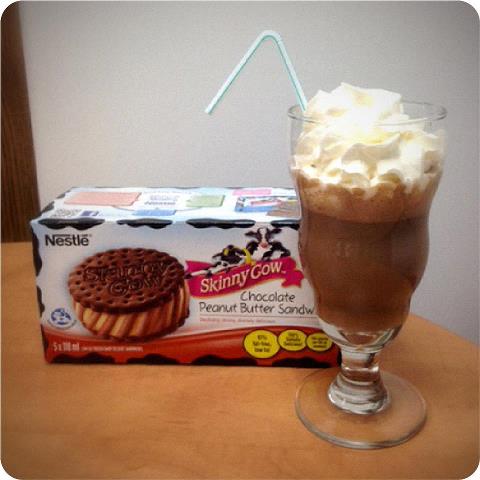
Food Friday (Skinny Cow Shake)


Skinny Cow posted this on their Facebook page.  Honestly, I never would have thought of doing this, but it seems like a quick, easy and satisfying way to solve the “I just gotta have a milkshake” craving.

Blend:
Your favorite Skinny Cow sandwich
¼ to ½ cup of skim milk
Top with low fat or fat free whipped topping

Their comment was “Can I just say YUM?” 


Thursday, 11 April 2013

Thursday's Random Thought (Triggers)


I’ve probably mentioned somewhere in this blog that I am an avid reader.  My choices for reading material are pretty eclectic and recently I picked up a book called CONTAGIOUS (Why Things Catch On) by Jonah Berger.  It’s basically a book about marketing strategies and why certain things catch on and why certain things flounder.  In reading this book I discovered a couple of things about myself … including the fact that I am pretty gullible when it comes to advertising.  But then there are millions and millions of dollars spent every year to ensure that gullibility. Professor Berger explains why.


He and a colleague also performed a study done in college cafeterias, and this study in particular caught my attention.  It was simple and something that everyone can apply to our day-to-day lives.

In the chapter titled “From Mars Bars to Voting and How Triggers Effect Behavior” Professor Berger explains it like this …

“Why does it matter if particular thoughts or ideas are top of mind? Because accessible thoughts and ideas lead to action.

… “Music researchers Adrian North, David Hargreaves, and Jennifer McKendrick examined how triggers might affect supermarket buying behavior more broadly. You know the Muzak you’re used to hearing while you shop for groceries? Well, North, Hargreaves, and McKendrick subtly replaced it with music from different countries. Some days they played French music while other days they played German music—what you’d expect to hear outside a French café on the banks of the Seine and what you might expect to hear at Oktoberfest. Then they measured the type of wine people purchased.

When French music was playing, most customers bought French wine. When German music was playing most customers bought German wine. By triggering consumers to think of different countries, the music affected sales. The music made ideas related to those countries more accessible, and those accessible ideas spilled over to affect behavior.

Psychologist Gráinne Fitzsimons and I conducted a related study on how to encourage people to eat more fruits and vegetables. Promoting healthy eating habits is tough. Most people realize they should eat more fruits and vegetables. Most people will even say that they mean to eat more fruits and vegetables. But somehow when the time comes to put fruits and vegetables into shopping carts or onto dinner plates, people forget. We thought we’d use triggers to help them remember.

Students were paid twenty dollars to report what they ate every day for breakfast, lunch, and dinner at their nearby dining hall. Monday: a bowl of Frosted Flakes cereal, two helpings of turkey lasagna with a side salad, and a pulled pork sandwich with spinach and fries. Tuesday: yogurt with fruit and walnuts, pepperoni pizza with Sprite, and shrimp pad thai.
Halfway through the two weeks we’d designated for the study, the students were asked to participate in what seemed like an unrelated experiment from a different researcher. They were asked to provide feedback on a public-health slogan targeting college students. Just to be sure they remembered the slogan, they were shown it more than twenty times, printed in different colors and fonts.

One group of students saw the slogan “Live the healthy way, eat five fruits and veggies a day.”
Another group saw “Each and every dining-hall tray needs five fruits and veggies a day.” Both slogans encouraged people to eat fruits and vegetables, but the tray slogan did so using a trigger. The students lived on campus, and many of them ate in dining halls that used trays. So we wanted to see if we could trigger healthy eating behavior by using the dining room tray to remind students of the slogan.

Our students didn’t care for the tray slogan. They called it “corny” and rated it as less than half as attractive as the more generic “live healthy” slogan. Further, when asked whether the slogan would influence their own fruit and vegetable consumption, the students who had been shown the “tray” slogan were significantly more likely to say no.

But when it came to actual behavior, the effects were striking. Students who had been shown the more generic “live healthy” slogan didn’t change their eating habits. But students who had seen the “tray” slogan and used trays in their cafeterias markedly changed their behavior. The trays reminded them of the slogan and they ate 25 percent more fruits and vegetables as a result. The trigger worked.

We were pretty excited by the results. Getting college students to do anything—let alone eat more fruits and vegetables—is an impressive feat.”

This got me thinking about triggers.  In his book Professor Berger often uses the phrase “top of mind … tip of tongue”.  That phrase is so true under many circumstances, but we’ll stick to weight issues here.

In most homes the refrigerator becomes a communication hub for the household.  Covered in magnets it holds family photos, post cards, children’s art, permission slips to sign, recipes we are meaning to try or simply cute magnets on their own.  My children are grown and gone and I still have magnets on the door of my refrigerator.

So I got to thinking … always dangerous, ask anyone … what if you moved some of those bits and pieces to the side, or lower down on the fridge, maybe get rid of that chocolate cake recipe altogether and put up some pictures of fruits and vegetables.  That way when you have the munchies and are getting ready to raid the fridge those luscious strawberries will be the first thing you see.  If you are thinking of crispy chips and walk into the kitchen, crunchy celery catches the corner of your eye.


And following through with Professor Berger’s theory, you may find that refrigerators in general trigger you to eat more fruits and veggies?

“Top of Mind … Tip of Tongue”


Yup … I do like that!

Friday, 5 April 2013

Food Friday - Stuffed Avocado Three Ways


Avocados get a bad rep when it comes to dieting and weigh loss because of their high calorie and fat counts.  The truth is that the calories and fat in avocados are the “healthy” kind.  Granted, you wouldn’t lose weight quickly on an avocado every day diet, but when I saw the following recipes at Home Made Simple my mouth started to water.  The recipe with Gruyere is obviously going to be a higher calorie choice than the recipe including quinoa, but as a lunch or light dinner, this would be a nice “something different”.  More nutritional information follows the recipes if you want to know more about avocados.

I always shied away from avocado because it was not something I grew up eating.  Quite frankly, I did not know how to pick a “good one”.  So a handy avocado selection tip is to place the avocado in the palm of your hand and squeeze gently.  If it gives a little to your touch, it’s ripe and should be used right away.  If it feels hard, it’s not ripe, so place in a brown paper bag and store in a dark place for two days.  Don’t refrigerate.


And, for goodness sake don’t forget about it … it could turn into something that you don’t want to deal with and will probably put you off avocado forever! (Loud throat clearing noise inserted here) Not that I have ever done that.

Enough blabbering, and on to the recipes –

Baked Stuffed Avocados with Quinoa, Tomatoes and Feta

Serves: 2 – 4
Prep Time: 15 minutes
Bake Time: 10-12 minutes

2 ripe avocados
500 ml (2 cups) cooked quinoa
1 medium-sized tomato, diced
250 ml (1 cup) crumbled feta cheese
Salt and pepper to taste

Preheat oven to 190 degrees Celsius (375 F)
Slice avocado lengthwise and remove the pit by gently tapping it with a large, sturdy kitchen knife.  When the knife is slightly wedged in, very carefully twist and pull away from the fruit.
With a smaller kitchen knife, carefully make criss-crosses in the avocado flesh, making sure not to break through the skin.
Using a spoon, gently scoop out the avocado flesh and place in medium sized bowl.
Add cooked quinoa and diced tomato to the avocado pieces and gently mix together while preserving the chunks of flesh.  For a creamier consistency, use more pressure when mixing to mash the avocado chunks.
Place hollow avocado shells in baking dish, and carefully fill each with the mixture.
Generously layer crumbled feta cheese over top and place in oven for 10 –12 minutes or until cheese is sufficiently melted.
Add salt and pepper to taste, then serve immediately.
TIP:  If the hollow avocado shells keep falling to the side, simply cut a small slice off the bottom so they will sit flat in the baking dish.

Baked Stuffed Avocados with Onions and Gruyere

Follow the steps above, then use the following add-ins instead of quinoa, tomato and feta.

Sauté 1 diced medium sized sweet onion with 2 pats of butter in a small skillet until translucent.  Add 1 clove of minced garlic and stir frequently for 5 – 8 minutes until mixture is soft and slightly browned.  Add the avocado flesh, mix thoroughly, then spoon into avocado shells.  Place them in a baking dish, top with 375 ml (1 ½ cups) of Gruyere Cheese and bake for 12 – 15 minutes.  Add salt and pepper to taste.  Serve immediately.

Baked Stuffed Avocados with Sautéed Shrimp and Parmesan

Sauté 1 diced medium sized onion with 2 pats of butter in a small skillet until translucent.  Add 1 clove
of minced garlic and stir frequently 5 – 8 minutes until the mixture is soft and slightly browned.  Add to the avocado flesh, mix thoroughly, then spoon into avocado shells.  Place 4 –5 thawed baby shrimp in each shell, set them in a baking dish and generously sprinkle with 125 ml (1/2 cup) of grated Parmesan Cheese.  Bake for 12 – 15 minutes.  Add salt and pepper to taste, and serve immediately.

Enjoy!

Recipes above from:

Nutritional Information below from:

Even though there are a lot of calories in avocados, they will not harm your diet. Actually, they are quite beneficial. They contain a large supply of healthy fats that your body actually needs. For some reason calories and fats are frowned upon, and most think the less they consume the better off they will be.

So How Many Calories Are in an Avocado?

A serving is 1/2 of an avocado and contains about 153 calories. One medium sized avocado contains roughly about 306 calories, and one large avocado contains about 322 calories.

Ninety-one percent of those calories come from fat. But don’t let that scare you into not eating avocados–a whopping 63 percent of those fat calories come from monounsaturated fats, and 20 percent come from polyunsaturated fats. These are good fats, which your body needs, and they will help to lower your bad cholesterol levels and keep your heart healthy.

Even though avocados contain a lot of calories, they also contain a lot of vitamins and minerals, which will fill you up fast and keep you feeling full. You are better off to eat them rather than other foods with fewer calories because they will help you to reduce your cravings and calories for non-diet friendly foods in the long run.

Thursday, 4 April 2013

Thursday's Random Thought - Dignity and Stereotypes


I recently had a conversation with a friend around the subject of dignity.  How we allow people to either uplift or belittle our own sense of dignity and self worth.  I try to keep my “Random Thoughts” postings short and sweet so I won’t go into details, but a lot of what we discussed led back to the issue of stereotyping and expectations (good and bad) based on perceptions with no solid grounding.

Stereotyping is usually unfairly based on many factors most of which are totally out of the realm of our control; color, sex, heritage, social status (or lack thereof), job (or lack thereof), education (or lack thereof) and, yes, even weight and body type. 

On the heels of the conversation I came across the following picture.  Strangely, this happens frequently?  Maybe my brain is just tuned to the recent topic of conversation and notices appropriate material more easily?  But that sounds like a discussion for a different blog!  Back on topic … this picture exemplifies the idea of stereotypes surrounding body types.  Whether overweight or not, some people have preconceived notions of what other people are like.  It’s not fair to the person believing the stereotype, or to the person who is the subject of the preconceived idea.  I think everyone loses out.

It made me think … so I thought I’d share it here.


Wednesday, 3 April 2013

Urban Myth or Scarey Truth?


As leader of my TOPS group, one of the things I strongly advocate is for every member to offer suggestions for meeting topics, to bring problems or success stories to the meetings for discussion.  It’s difficult to come up with a different, informative and hopefully interesting topic every week.  I never mind being interrupted when something I’ve mentioned happens to pull a thread and the discussion veers off in a direction I had not planned.  And, most importantly, I never ever mind if someone wants to lead the meeting for one week.  It gives me a little break and its fun listening to what other people find to bring to the table.

When I plan my meeting topics I try to do as much research as I can because I do not want to impart false information to my members.  Group members who disagree with what I am saying sometimes shoot me down, but that’s what always leads to those lively discussions.  Weight loss and dieting is by no means an exact science.  What succeeds for one person may not for someone else?  Lively discussion or not, agreement or not, the one thing I can fall back on is my research.

A couple of weeks ago our sole male group member asked if he could read something he had been sent in an email from a friend of his who is also on a weight loss journey.  He thought it would be an interesting topic to discuss.  Of course I immediately said yes.

The following is the email that he read to the group.  I include it in its entirety so you can make up your own mind.

Pass the butter please …

Margarine was originally manufactured to fatten turkeys.

When it killed the turkeys, the people who had put all the money into the research wanted a payback so they put their heads together to figure out what to do with this product to get their money back.  It was a white substance with no food appeal so they added the yellow coloring and sold it to people to use in place of butter.  

How do you like it?  They have come out with some clever new flavoring. 

Do you know the difference between margarine and butter?

Read on to the end … it gets very interesting.

1.  Both have the same amount of calories.
2.  Butter is slightly higher in saturated fats at 8 grams; compared to 5 grams for margarine.
3.  Eating margarine can increase heart disease in women by 53% over eating the same amount of butter, according to a recent Harvard Medical Study.
4.  Eating butter increases the absorption of many other nutrients in food.
5.  Butter has many nutritional benefits where margarine has a few and only because they are added.
6.  Butter tastes much better than margarine and it can enhance the flavours of other foods.
7.  Butter has been around for centuries where margarine has been around for less than 100 years.

And now, for Margarine;

1.  Margarine is very high in trans fatty acids.
2.  Margarine triples the risk of coronary heart disease.
3.  Margarine increases total cholesterol and LDL (this is the bad cholesterol) and lowers HDL (the good cholesterol).
4.  Margarine increases the risk of cancers up to five times.
5.  Margarine lowers the quality of breast milk.
6.  Margarine decreases immune response.
7.  Margarine decreases insulin response.

And here’s the most disturbing fact … here is the part that is VERY interesting!

8.  Margarine is but one molecule away from being plastic and shares 27 ingredients with paint.

These facts alone were enough to have me avoiding margarine for life and anything else that is hydrogenated (this means hydrogen being added, changing the molecular structure of the substance).

You can try this yourself:

Purchase a tub of margarine and leave it open in your garage or shaded area.  Within a couple of days you will notice a couple of things:
* no flies, not even those pesky fruit flies, will go near it (that should tell you something)
* it does not rot or smell differently because it has no nutritional value, nothing will grow on it.  Even those teeny weenie microorganisms will not find a home to grow.

Why?  Because it is nearly plastic.

Would you melt your Tupperware™ and spread that on your toast?

Chinese Proverb:  When someone shares something of value with you and you benefit from it, you have a moral obligation to share it with others.

Now, I know there are many products marketed as “food” which are questionable.  Yes, they are edible, that’s about all you can say about them.  I found this a little frightening because I happen to margarine.  Not that I prefer its taste over butter, and goodness knows the price is certainly not a determining factor.  I prefer it for the simple fact that it is always spreadable.  In my eyes, that’s its one redeeming quality.  I can take it out of the fridge and spread it on my toast in the morning.  Now I had to try and weigh that CONVENIENCE against all the horrible things I had just heard.

One thing that our region does for TOPS leaders is to collect a meeting idea from each group, copy them and distribute the collection of ideas to other group leaders for potential meeting discussion ideas.  As I was going through the binder to gather ideas what did I find but a copy of the very same email printed off, indicating that it had been read at another TOPS meeting as well.  Obviously, this email is circulating quite efficiently!

What S. read to the group led to one of the aforementioned lively discussions with the group split pretty evenly down the middle in the pro and con departments.  Despite the fact that this article allegedly came straight from a Harvard study, to me, it had a bit of an “urban myth” taste to it.  Not purposely trying to discredit the information he brought to the table, but I just felt a need to check into it a little bit further.  I was a little surprised at what I found …

The above quoted compilation began circulating on the Internet in June 2003, often under the title
“Butter vs. Margarine,” and surprisingly enough there was a fair bit of truth to it, at least a the time.  According to the latest finding in the medical world in 2003, margarine could increase the risk of heart disease, depending upon the type of fat contained in the spread.  Previously, the dietary villain in the development of coronary disease was presumed to be saturated fat, but new evidence points the finger at trans fat (also known as trans fatty acids).  Although butter has its own set of dietary shortcomings, it does not contain trans fat.

Margarine was once written off as a plastic-like substance linked to clogged arteries and increased health risks.

But the product has undergone a major transformation in recent years, so much so that many brands are starting to more closely resemble a health product than a high-fat butter like spread.  Today’s margarines contain only traces of maligned trans fats, are fortified with essential fatty acids – particularly omega-3 – and vitamins, and are sometimes even infused with olive oil.  Most brands are also relatively low in saturated fats or calories and contain no cholesterol.  Numerous types of margarine carry the Heart and Stroke Foundation’s Health Check seal, a designation that tells consumers the product has met its nutrition criteria.  Product labels are also designed to boast about the healthy changes.

Does that mean the age-old debate over the health benefits of butter versus margarine is finally over?

The short answer is no.


Margarine has been around for more almost 200 years and came into widespread (no pun intended) use following the Second World War largely because of its low price and purported health benefits.

But public opinion changed in recent years when concern over the high levels of trans fats in many margarine brands reached a fever pitch.  Companies went back to the drawing board, reformulated products and put a major emphasis on the health aspects of margarine.

Yet, camps remain divided on whether margarine’s evolution represents real benefits for consumers.

One of the main points of contention is the type of omega-3 fatty acid found in margarine.  Most of it comes from plant sources, such as canola or soybean oil, which many health experts say is less beneficial to health than omega-3 derived from fish.

Unilever Canada has been actively promoting the health aspects of margarine, particularly with its Becel line of products.  Nearly all Becel products contain omega-3, but only one, Becel Omega-3plus, contains fatty acids from fish oil, not plant oil. 

To boost its health profile, the margarine industry has also taken to promoting the fact it’s low in saturated fat, a thinly veiled jab at butter.  Like most dairy products, butter has a relatively high amount of saturated fats, which have been associated with a higher risk of heart disease and other serious health problems.

BUT, the margarine maker’s jabs may be a moot point – growing evidence suggests saturated fat may not be as harmful as once thought.  Recent research found the risk of heart disease or stroke was similar between people who consumed the highest and lowest amounts of saturated fat.

That type of research provides ammunition to the dairy industry, which has faced a butter backlash due in large part to its high saturated fat content.
Above information gathered from www.thetipsbank.com/margarine and www.theglobeandmail.com

I found the best breakdown on the truth or fiction issue provided by www.truthorfiction.com/rumors/b/butter-margarine however, even their article was a little outdated.  I will follow their format and go through the original email with more current information.

Step by step …

1.  Margarine was originally manufactured to fatten turkeys.  When it killed the turkeys, the people who had put all the money in the research wanted a payback so they put their heads together to figure out what to do with this product to get their money back.  It was a white substance with no food appeal, so they added the yellow coloring and sold it to people to use in place of butter.
FICTION  - Margarine originated with the discovery, by French chemist Eugene Chevreul in 1813, of margaric acid.  Emperor Louis Napoleon III of France offered a prize to anyone who could make a satisfactory substitute for butter, suitable for use by the armed forces and the lower classes.  French chemist Hippolyte Mege-Mouries invented a substance he called oleomargarine, the name of which became shorted to the trade name “margarine”.  Mege-Mouries patented the concept in 1869 and expanded his initial manufacturing operation from France but had little commercial success.  In 1871, he sold the patent to the Dutch company Jurgens, now part of Unilever.  In the same year the German pharmacist Benedict Klein from Cologne founded the first margarine factory “Benedict Klein Margarinewerke”, producing the brands Overstolz and Botteram.

The principal raw material in the original formulation of margarine was beef fat.  Shortages in supply combined with advance by Boyce and Sabatier in the hydrogenation of plant materials soon led to the introduction of vegetable oils to the process, and between 1900 and 1920 oleomargarine was produced from a combination of animal fats and hardened and unhardened vegetable oils.  The depression of the 1930’s, followed by the rationing of WWII, led to a reduction in supply of animal fat; and, by 1945, “original” margarine almost complete disappeared from the market.  In the U.S. problems with supply, coupled with changes in legislation, caused manufacturers to switch almost completely to vegetable oils and fats by 1950.  The industry was ready for an era of product development.

The competition between major producers was given impetus with the beginning of commercial television advertising in 1955; and throughout the 1950s and 1960s, competing companies vied with each other produce the margarine that tasted the most like butter.

IN 1978, an 80% fat product called KRONA, made by churning a blend of dairy cream and vegetable oils, was introduced in Europe; and, in 1982, a blend of cream and vegetable oils called CLOVER was introduced in the UK by the milk marketing board.  The vegetable oil and cream spread “I Can’t Believe It’s Not Butter” was introduced in Canada in 1991.

2.  Both margarine and butter have the same amount of calories.
FACT – A tablespoon of butter has 100 calories and a tablespoon of margarine has 100 calories.

3.  Eating margarine can increase heart disease in women by 53% over eating the same amount of butter, according to a recent Harvard Medical Study.
FACT BUT UPDATED – I did not come across the “53%” study, but the Harvard School of Public Health published a report on this.  It states that more than 30 years ago research indicated that saturated fat (such as butter) was bad for the heart and people were told to switch to margarine.  A Harvard study of women between 1980 and 1994 found a significant reduction in heart disease risk by reducing smoking, hormone treatment, and dietary improvements including reducing or eliminating saturated fat (such as in butter).  Further research has shown, however, that some margarines contained trans fat, which was even worse for the heart than saturated fat – we can assume this had some bearing over the inclusion of the 53% in the original quote.  Over the past decade, margarine spreads have gone through many developments in efforts to improve their healthfulness.  Most brands have phased out the use of hydrogenated oils, and are now also trans fat free.  As well, many brands have launched refrigerator-stable margarine spreads that contain only 1/3 of the fat and calorie content of traditional spreads.  As mentioned previously, other varieties of spreads include those with added Omega-3 fatty acids, those with low or no salt, those with added plant sterols, claimed to reduce blood cholesterol, and some made from olive oil or certified vegan oils.

4.  Butter is slightly higher in saturated fats …
FACT – A tablespoon of butter is 7g of saturated fat.  A tablespoon of margarine is 2g of saturated fat.

5.  Eating butter increases the absorption of many other nutrients in other foods.
FACT BUT WITH AN EXPLANATION – A recent study made by the American Journal of Clinical nutrition shows that dietary fact helps the absorption of vitamins from fruits and vegetables.  Fat, along with carbohydrates and protein are considered the three macronutrients essential in everyone’s diet.  Fat plays many roles in the body such as providing energy, regulating body temperatures, protecting internal organs and aiding in the absorption of fat-soluble vitamins.  With the changes made to the composition of margarine in recent years, I think it would be safe to assume the playing field is level in the matter of butter and margarine.

6.  Butter has many nutritional benefits where margarine has a few, only because they have been added.
UNDECIDED – It depends on what you are measuring.  The advantage of butter is that it is a more natural product than margarine and does have higher vitamin content.  But butter is high in saturated fat.  Heart doctors have started recommending butter over original margarine BUT recommend trans fat free margarines over butter.  It all gets very confusing so watch your labels.

7.  Butter tastes much better than margarine and it can enhance the flavors of other foods.
UNDECIDED – As is so often the case when discussing food, that is a matter of personal preference.

8.  Butter has been around for centuries where margarine has been around for less than 100 years.
FICTION – This was covered under the first point, but margarine has been around since at least 1813, making it almost 200 years old.  Granted, a relative newcomer when compared to butter.

9.  Margarine is high in trans fatty acids.
FICTION – As mentioned previously, this may have been the case originally, and my still be the case for some margarines on the market.  But science and research and current technology have taken this argument off the table.  Again … read your food labels!

10.  Margarine triples the risk of coronary disease.
11.  Margarine increases total cholesterol and LDL and lowers HDL cholesterol.
12.  Margarine increases the risk of cancer up to five-fold.
FICTION – Even before the changes made to eliminate trans fatty acids, there was no conclusive studies done to substantiate the “triples the risk” or the “five-fold” claims.  The cholesterol issue has been addressed with the changes in the trans fatty acids issue.

13.  Margarine lowers the quality of breast milk. 
FACT AT THE TIME BUT SINCE AMENDED – In one study done comparing Canadian breast milk to Chinese breast milk, Canadian mothers had 33 more trans fats in their milk than the Chinese mothers.  So the quality of the breast mil can be affected by the consumption of trans fats.  Of course, the quality of breast milk is affected both negatively and positively by anything ingested by the nursing mother.  Although I labeled this point as a “FACT” with the reduction of trans fatty acids in margarine the statement definitely needs to be amended.

14.  Margarine decreases immune response.
15.  Margarine decreases insulin response.
FACT AT THE TIME BUT NOW FICTION – These have both been addressed and eliminated with the changes made to margarine with regards to the trans fatty acids content.

16.  Margarine is but ONE MOLECULE away from being PLASTIC.
FICTION – These types of statements (even if they were true) are essentially meaningless.  Many disparate substances share similar chemical properties, but even the slightest variation in molecular structure can make a world of difference in the qualities of those substances.  This statement is more than likely a hyperbole tossed in by the author in an effort to make his point more strongly.  The claim that some product is “but a single molecule away” from being a decidedly inedible (or even toxic) substance has been applied to a variety of processed foods.  The following are all quotes from emails submitted to www.snopes.com, the premier Internet site for “myth-busting”:

“I was told that the difference between Cool Whip and Styrofoam is one molecule … is this true?” (November 2005)

“Is Velveeta Processed Cheese food really one molecule different from plastic?” (December 2006)

“I heard Pam spray is 1 molecule away from plastic and is therefore dangerous?”
(March 2007)

“I am tired of hearing my husband say the Cheez Whiz is only 2 ingredients different from garbage bags.  Can you please set him straight?” (January 2008)

Perhaps whoever wrote this heard a discussion about the “plasticity” of margarine.  It is “Plastic” at room temperature meaning that the shape of it can be changed when pressure is applied.  That does not mean it is composed of what we normally think of as plastic.  It was, after all, originally made of animal fats but increasingly now is made from vegetable oils.

So … this long tome of a blog post (and it really turned out much longer than I ever anticipated or intended … so thanks for bearing with me, if you made it this far) is the outcome of my research on the Butter vs. Margarine debate.  It has cleared up some misconceptions in my mind.  At the risk of making a long blog post even longer, I also came across some interesting tidbits of information that didn’t really fit into my answer to the ongoing debate.  If you’re interested I include them below:

Since margarine intrinsically appears white or almost white, by forbidding the addition of artificial coloring
agents, legislators found that they could protect the dairy industries by discouraging the consumption of margarine based on lack of visual appeal.  Bans on color became commonplace in the U.S., Australasia, Canada and Denmark and, in some cases, those bans endured for almost 100 years.  It did not become legal to sell colored margarine in Australia, for example, until the 1960s.  The rivalry between the dairy industry and the oleomargarine industry persists even today.

In Canada margarine was banned from 1886 until 1948 though this ban was temporarily lifted from 1917 until 1923 due to dairy shortages.  Nevertheless, bootleg margarine was produced in the neighboring
Dominion of Newfoundland from whale, seal and fish oil by the Newfoundland Butter Company and was smuggled to Canada where it was widely sold for half the price of butter.  The Supreme Court of Canada lifted the margarine ban in 1948 in the Margarine Reference.  In 1950, as a result of a court ruling giving provinces the right to regulate the product, rules were implemented in much of Canada regarding margarine’s color, requiring it to be bright yellow or orange in some provinces or colorless in others.  By the 1980s, most provinces had lifted the restriction, however, in Ontario it was not legal to sell butter-colored margarine until 1995.  Quebec, the last Canadian province to regulate margarine coloring, repealed its law requiring margarine to be colorless in July 2008.

In the United States as early as 1877, the first U.S. states had passed laws to restrict the sale and labeling of margarine.  By the mid 1880s, the U.S. federal government had introduced a tax of two cents per pound, and manufacturers needed an expensive license to make or sell the product.  Individual states began to require the clear labeling of margarine.  The color bans, drafted by the butter lobby, began in the dairy states of New York and New Jersey.  In several states, legislatures enacted laws to require margarine manufacturers to add pink colorings to make the product look unpalatable, but the Supreme Court struck down New Hampshire’s law and overruled these measures.  Some localities required restaurants using margarine to post signs reading “Artificial Butter Used Here”.

By the start of the 20th century, eight out of ten Americans could not buy yellow margarine, and those that
could had to pay a hefty tax on it.  Bootleg colored margarine became common, and manufacturers began to supply food-coloring capsules so that the consumer could knead the yellow color into margarine before serving it.  Nevertheless, the regulations and taxes had a significant effect; the 1902 restrictions on margarine color, for example, cut annual U.S. consumption by one-third.

With the coming of WWI, margarine consumption increased enormously, even in countries away from the front like the U.S.  In the countries closest to the fighting, dairy products became almost unobtainable and were strictly rationed.  The UK, for example, depended on imported butter from Australia and New Zealand, and the risk of submarine attack meant little survived the trip.

The long-running battle between the margarine and dairy lobbies continued:  In the U.S., the Great Depression brought a renewed wave of pro-dairy legislation; the Second World War, a swing back to margarine.  Post-war, the margarine lobby gained power and, little by little, the main margarine restrictions were lifted, the most recent states to do so being Minnesota in 1963 and Wisconsin in 1967.  Lois Dowdle Cobb of Atlanta Georgia led the move to lift the restriction on margarine, but some unenforced laws still remain on the books. (www.wikipedia.org)

Who knew, something I so took for granted had such a controversial and interesting history.  But, after what amounts to 4000 words later I can feel better about enjoying the convenience of spreading margarine on my toast in the morning.

And that having been said … someone had to introduce me to the “Butter Bell Crock”.


Sheesh …. Does this Butter vs. Margarine controversy ever end???????