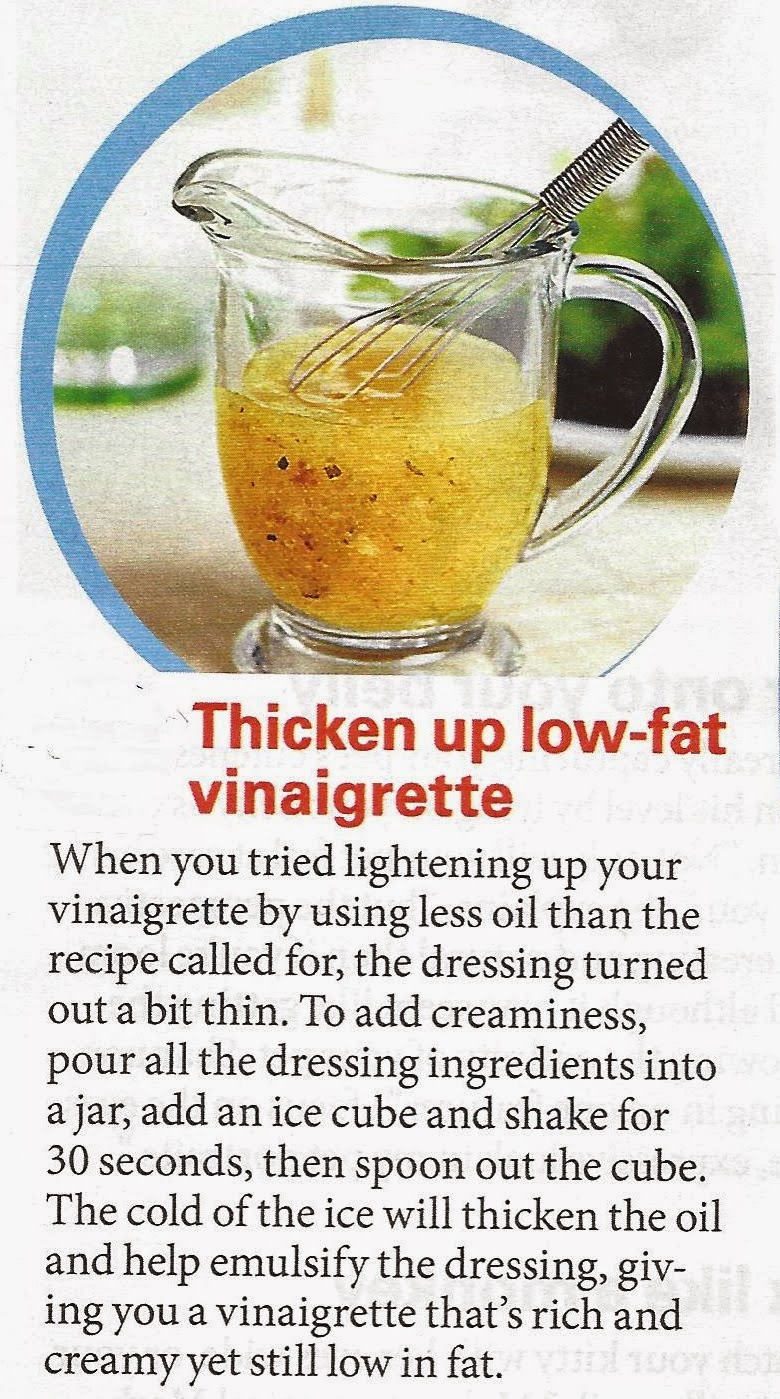
I was paging through Woman's World Magazine this week and quickly turned past a page with the word "cookie" at the top.
Then I flipped back.
Huh? -- I thought ... what a good idea.
We all love the smell of cookie ingredients and this allows us to have that sensory pleasure AND get some pampering AND (to quote the magazine article) "You'll feel like you are indulging -- without the extra calories!"
With thanks to Woman's World Magazine (September 15, 2014) for the page, I thought I'd share.
Eating right is hard!
Being fat is hard!
So ... Pick your hard!
Sharing the successes,
the slip-ups
and hopefully
a little laughter about dieting.
Saturday, 13 September 2014
Vintage Thursdays 7 - The 1930's
Lately I’ve been enjoying finding vintage pictures and
newspaper ads relating to dieting and exercise. It just reinforces that whether it be for weight loss, appearance
or health it is not a new concept to keep oneself fit.
So let’s visit the 1930’s …
Mature women in the 30’s may have been born into a time when
corsets and bustles were still the norm, but that all changed in the 20’s with
the “flapper era” when the ideal woman’s figure was almost boyish. This look carried through to the 30’s when
dress styles were very sleek and hips almost non-existent.
And, actresses like Barbara Stanwyck began
wearing pants, another look that required a slim and sleek silhouette.
No wonder a manual extolling the virtues of exercising away
you curves would have been printed.
The “Hollywood machine” was also in full swing, pumping out
starlets with the same body types. They
even made it look glamorous to work out.
Imagine wearing high heels on a treadmill?
As Hollywood goes – so goes the populace and exercise
classes were held for working ladies.
These gals look like they just dropped in on their lunch hour to
exercise in their office wear, complete with hats.
Exercise classes were in full swing. This picture from the Bounds Green School in
London shows the Class of 1933 doing their slimming exercises.
Even the Arsenol Soccer Team got into the act with the
demonstration of the new “Gymo Frame”.
No doubt the precursor to the current day “Bowflex” all in one exercise
machine.
When sports teams and athletes use machines it soon becomes
available for public consumption as well.
Here is a woman using the “Fat Buster”.
It doesn’t look like any exercise is actually required on this machine
though … probably another one of those that supposedly “does the work for
you”. Even then!
And of course, when fitness and exercise is not your cup of
tea, there were always the snake oil salesmen around to promise miracles in the
form of a pill. Although they were
giving away “Barrels and barrels of free samples” it still cost you $1 to place
your order. That’s about $13.54 in 2014
currency. EVEN THEN!!
This last picture is here just because it tickled my funny
bone. “DOs and DON’Ts FOR HUSBANDS AND
WIVES” gives you some advice from days gone by. My favorite is “DON’T let your husband wear a violet tie with grass-green
socks. If he is unhappily devoid of the
color sense, he must be forcibly restrained”.
I chuckle, but in my opinion the advice on the “For Husbands”
side of the page still holds strong today!
Wednesday, 10 September 2014
Revisiting Walking
When starting a weight loss program one of the things that
makes most people cringe is the thought of starting an exercise program. Let’s face it, as I have discussed here many
times before – the math is easy – calories burned need to exceed calories
consumed. If you take in more calories
than you put out you gain weight.
Simple!
When starting an exercise program many people start off fast
and furious, then when the muscle aches and joint pains start – they ease off
(or totally give up) and it derails all their best intentions. When it comes to exercise for weight loss
slow and steady far outdoes fast and furious.
And – almost everyone can walk.
It is inexpensive.
It requires no gym membership.
It requires no special equipment, other than a suitable pair
of shoes.
It can be done almost anywhere … sidewalks, trails, malls,
indoor tracks or in your living room in front of a tape such as Leslie
Sansone’s One Mile Walk. (As much as I
try to avoid promoting specific products, her One Mile Walk DVD is excellent,
as are all her programs)
I have read many articles over the years about people who
have lost significant weight with the combination of walking and sensible
eating. NOTE: I said the combination of exercise
and sensible eating. No point in going
for a walk when your destination is the nearest donut shop or to finish your
walk in time to watch you favorite television program accompanied by a bag of
potato chips.
In an article I read recently in Canadian Living Magazine,
Ann Douglas states “I challenged myself to become physically active for the
first time ever. I dusted off the
unused treadmill sitting in the spare bedroom and treated myself to a FitBit (a
wearable pedometer) for motivation. I
aimed for a minimum of 10,000 steps
(roughly eight kilometers of walking) each day. At first, a walk around the block was all I could manage. It took only a few minutes of walking before
I would start to experience excruciating cramping on the soles of my feet. But as I built up my endurance and the
weight began to come off, the foot pain disappeared and being active became a
joy rather than an agony.” Further
along in the article she says, “I’ve developed an unexpected love of
physical activity. Twice daily walks
keep my anxiety levels in check. I feel
better on days when I am physically active (less restless and edgy, as if I
have too much of the wrong kind of energy).
I have a newfound respect for my body and what it can do, and I
constantly challenge myself to increase my strength and stamina.” She concludes by adding, “Sure, I have
managed to lose a lot – 120 pounds, to be precise. But I have gained so much more; I have gained a life.”
I found that really inspiring and it was all due to some
lifestyle changes and walking.
Take the lesson of The Tortoise and The Hare to heart … slow
and steady really does win the race – when it comes to getting healthy.
Walking is the ideal low impact aerobic exercise. That’s why walking has become one of the
most popular ways to stay fit. As
stated above, it’s inexpensive – all it takes is a little motivation and a
comfortable pair of shoes.
Last time we talked about walking I posted a video called 23
½ Hours, which showed the benefits of simply walking ½ hour per day … leaving
you 23 ½ hours to do whatever else in your life needs to be done. Recent studies once again confirm that
premise … according to the Cooper Institute for Aerobics Research, men who walk
at least half an hour, six days a week, can cut their mortality rate from heart
disease in half, compared to those who are sedentary. Studies show similar heart health benefits for women when the
exercise regularly.
Regular walking CAN and DOES help control weight. When combined with a low-calorie, low-fat
diet, walking daily can help reduce body weight and fat. It’s an effective
calorie burner. Walking at an even pace
for 1 hour burns about 350 calories, while walking briskly and moving your arms
with each stride can burn as much as 500 calories, depending on your
metabolism. The extra bonus is
that you will continue to burn calories even after you’ve finished
exercising.
Imagine burning calories even while you sleep!
Walking is no different than any other exercise. To maximize the benefits you must sustain an
activity for at least 20 to 60 minutes at each session … BUT … if you are out
of shape or have physical limitations start with a 5 or 10 minutes workout and
very gradually add 2 minutes every week or so until you reach your goal. Even a leisurely walk of 10 –20 minutes
every day is beneficial … then if you decide you want to make that leisurely
stroll into a real workout, follow these guidelines used by the famous marathon
walker Ruth Artz:
- Try
to take long strides using your gluteal muscles (the muscle in your butt)
to propel your forward.
- Bend
your arms lightly, swinging them as you walk.
- Stand
up straight with your abdominal muscles tucked in.
- Maintain
a pace at which you are breathing deeply but can still carry on a
conversation, although you would prefer not to.
- If your breathing becomes labored and conversation difficult, you are working out too hard. Anytime you fell out of breath or have any pain, slow down or take a break.
I know … it seems hard to believe that something as simple
as walking can make a difference but it’s true! In the Chatelaine Magazine’s Health section (September 2013) they
had an article called “30 IS THE NEW 60” and it reiterated all of the above information as
well as the information in the 23 ½ Hours video.
“Researchers at the University of Copenhagen discovered
that an hour of exercise isn’t any more effective for weight loss than a
30-minute power session.” Granted,
you will definitely burn more calories by extending your work out, so if you
can keep going, by all means do so. “You’re
also more likely to to exercise and stick to it when it takes less time.”
Lee Scott the founder of WOW Power Walking says, “On a
scale of one to ten where one is easy and ten totally exhausting, aim for a
rating of six to eight for most of the walk. Warm up for about five minutes at a slower pace. Once you hit your stride, don’t stop.”
If you want to “put some extra pep in your step” he
recommends the following:
- Pump your arms. A few tweaks to your walking technique can boost the number of calories you burn. The best thing you can do is bend your elbows into a running position and pick up the pace. Then aim for short, quick steps (they make you move faster). Finally, keep your chin up and eyes focused in front of you (not at the ground). People tend to look down, especially if you are going up a hill, but that only slows you down.
- Set mini destination goals. Track your intensity by walking one or two city blocks at a fast speed, followed by one block at a recovery speed. Continue alternating speeds until you eliminate the slower intervals. Challenge yourself by walking in one direction for 15 minutes, then turn around and try to make it back to the same spot in 10 minutes.
- Add some hill training. Inclines are one of the easiest ways to boost intensity. The hill doesn’t have to be steep. Walking up and down even a mild slope increases the difficulty – and turns your walk into a killer glute workout.
- Toss in a circuit or two. Alternative five-minute burst of walking with lunges, push-ups and squats. You don’t need any equipment for these basic moves, and they’re a great way to add strength-training twist to any waling workout.
Okay, reality check … not all of us are ready for the amped
up version of Mr. Scott’s power walks.
For those of us who need to start slowly or who really cannot get out to
walk or spare the time on the treadmill, remember … one to two minute periods
of exercise that add up to 30 minutes of activity a day, are just as beneficial
for preventing high blood pressure, high cholesterol, and metabolic syndrome as
s structured program. Oregon State
University researchers recommend building exercise into our daily
routines. For example, by using a rake
instead of a leaf blower, or by pacing while talking on the phone you can sneak
in periods of exercise to burn off those calories.
The magic number s 10,000
steps per day!
The age-old trick of parking your car a little further from
the front door to the mall, the grocery store or your office will help add
steps.
If you are watching television get up and walk in place
during the commercials. Every little
bit helps.
If you have a dog walk him ... or borrow a neighbours dog! You know what they say ... "If your dog is overweight, it means YOU are NOT getting enough exersize.
Change is always difficult, but think of all the benefits of adding just a little bit of movement into your day. The key to success lies within yourself, so lace up your
sneakers and put one foot in front of the other and you will be starting your
own walking program to better health!
Saturday, 6 September 2014
Odds & Ends and Tips & Tricks
Coming up with fresh and interesting ideas for my TOPS meetings is not always an easy thing to do. Sometimes I feel like I am constantly repeating myself ... now don't get me wrong ... that's not necessarily a bad thing. Especially if you're like me and need to hear an idea, thought or tip over and over again to make it stick!
At the same time I do scour magazines and on line articles looking for ideas that might be a little outside the box or articles that put a fresh spin on tried and true methods. This involves bookmarking web pages and physically cutting pieces out of magazines. I have quite the portable file full of odds and ends.
I was looking through some of the pieces I have cut out and hoarded for a while intending to do a fun meeting around "Things That Make Us Go Hmmmm?". Just reading out tidbits of miscellaneous information and having some discussion as to whether they deserves a thumbs up or thumbs down in the "that could be true" department. I'm sure that will end up as a post here in the near future -- so check back! The point I am trying to make in my round-a-bout way is ... I have lots of little pieces of information that don't really warrant a whole post but are interesting/relevant/funny/informative non-the-less. That being said, here my first Odds and Ends mash-up of things I have collected. Enjoy!
At the same time I do scour magazines and on line articles looking for ideas that might be a little outside the box or articles that put a fresh spin on tried and true methods. This involves bookmarking web pages and physically cutting pieces out of magazines. I have quite the portable file full of odds and ends.
I was looking through some of the pieces I have cut out and hoarded for a while intending to do a fun meeting around "Things That Make Us Go Hmmmm?". Just reading out tidbits of miscellaneous information and having some discussion as to whether they deserves a thumbs up or thumbs down in the "that could be true" department. I'm sure that will end up as a post here in the near future -- so check back! The point I am trying to make in my round-a-bout way is ... I have lots of little pieces of information that don't really warrant a whole post but are interesting/relevant/funny/informative non-the-less. That being said, here my first Odds and Ends mash-up of things I have collected. Enjoy!
And to file under totally miscellaneous and not having anything to do with weight loss at all ...
Friday, 5 September 2014
Food Friday (Late Summer Fruits and Veggies)
Well summer is over and after some much needed R&R its
time to get back to real life. That
means back to TOPS meetings, back to MORE SERIOUS consideration about what I'm eating and restocking the
refrigerator with fresh seasonal foods.
So what’s in season right now?
GRAPES
Where I live grapes are readily available all year round,
but this time of year is the best for big juicy gems to pop into my mouth. Of course, that’s the reason its also wine
making season.
Grapes are a great portable snack. They are loaded with antioxidants and are a good source of
bone-strengthening vitamin K. Red
grapes and green grapes are equally healthy.
When shopping for grapes look for firm, plump grapes that are even in
color. They should have a smooth texture
and still be attached to their stems.
Store grapes in plastic wrap or place them in a ventilated
bag and they will stay fresh for about a week in your refrigerator’s crisper
drawer.
Wash them under cool running water just before eating or you
can freeze them for a cool treat.
EGGPLANT
When shopping for eggplant look for firm eggplants that are
heavy for their size and have smooth, shiny skin.
Eggplants will stay fresh for up to five days when stored in
the crisper.
Eggplant can be peeled or not, depending on personal
preference. After cutting the eggplant
into pieces, lightly salt and let stand for about 15 minutes to reduce some of
the bitterness. Wash and dry the pieces
before cooking to remove the excess salt.
Eggplant contains only 24 calories in a cup and is full of
antioxidants to help fight disease and cell damage.
APRICOTS
These little guys are full of vitamin A and are full of
beta-carotene. The only contain about
17 calories each and are reputed to keep your eyesight healthy.
When shopping look for a rich orange color as opposed to
light yellow. The fruit should feel
slightly soft to the touch.
BRUSSELS SPROUTS
Everyone pulls the “ugly face” when someone mentions
Brussels sprouts, but the come in at only 32 calories for ½ cup and are a great
addition to stir-fries. They can also
be steamed or roasted.
When shopping look for Brussels Sprouts that are firm,
compact and vividly green. Avoid the
one that look puffy and feel soft.
Especially avoid the one that look like they have perforations in their
leaves as this could be a sign of aphid infestation.
Stored in a plastic bag they will keep for up to ten day in
your refrigerator and they can be frozen for up to one year.
When preparing them make sure to rinse them well under cool
running water to remove any insects that may be hiding in their tightly packed
leaves. They cook very quickly and
taste best when cut into smaller pieces, so cut them into quarters before
steaming or roasting them.
Thursday, 7 August 2014
Vintage Thursdays 6
It's time to have a little chuckle at our own expense. I am not sure if these pictures are truly "vintage" or if they were just drawn to have that look. Either way, I thought they were amusing and would not hesitate to put them on my fridge in the form of magnets.
Feel free to snicker or groan ...
Friday, 1 August 2014
Food Friday ... Calorie Counting Goes Digital
My blog posts are my weekly TOPS meeting discussion topics …
it allows those members not able to make the meeting to keep up. It is also available for interested people
to, hopefully, get a little inspiration in their own weight loss efforts or
find discussion topics for their own weight loss groups. (That’s the goal in my land of rainbows and
unicorns)
Earlier this week I did our meeting, and posted it is a
blog, about Journalling. (http://mytwocaloriesworth.blogspot.ca/2014/07/revisiting-journalling-get-creative.html)
One of the pictures I used in the blog raised quite a few
eyebrows during our TOPS meeting and, honestly, I just used the picture because
it was an interesting illustration about how tech-savvy people can do on line
(and alternative types) of journalling.
It led to such a lively discussion and so much interest in the product I
had to do a little more research to find out more about it.
It’s called the Tellspec Scanner and although pictures of
the device are all over the Internet I understand it is not yet available at
the retail level. The inventors are looking for crowd-sourcing at
https://www.indiegogo.com/projects/tellspec-what-s-in-your-food .
The description (directly from the website) is as follows:
“Today there are wearable
trackers available for just about every move you make and step you take.
Almost. If there's a missing link, it's the ability to track all the food that
enters a person's mouth. Dieters are stuck tediously logging their eating
habits.
TellSpec, a device that's
quickly raising money on Indiegogo, claims to be that missing link and more.
With a wave of the hand, the device can reportedly calculate all the calories,
ingredients, chemicals, and allergens in any given piece of food.
Developed by entrepreneur
Isabel Hoffman and York University math professor Stephen Watson, TellSpec is a
raman spectrometer (the same kind of technology used in Jack Andraka's $15
cancer-detecting device) that uses an algorithm to calculate what's in your
food.
Hoffman first came up with the
idea because of her young daughter, who experienced mysterious physical
symptoms that were caused by allergens. While eating dinner one evening with
Watson, she picked up a flash drive and explained her vision: "Imagine a
device the size of a flash drive that could scan food, scan the air, and tell
me what kind of pollution I encountered today." Watson told her that he
didn't think the technology existed.
Raman spectrometers, which
essentially shoot lasers at objects and evaluate their chemical composition,
used to be big, bulky instruments that sat in laboratories. These days, it's
entirely possible to make a handheld version. Hoffman's question was whether it
could do what she was looking for.
In sum, the laser scans food
and measures the light that's reflected back. That information is sent to a
smartphone app that uses TellSpec's algorithms to measure the qualities of
what's in the food. Hoffman says it takes about 30 seconds on average to get a
reading, though some dark foods take longer.
As with all wish fulfillment
products (this one is for the health nuts), there are plenty of caveats with
TellSpec. That 3-D printed device seen in the video? It doesn't actually exist
yet. The food analysis engine has been tested with three different kinds of
spectrometers, but Hoffman and Watson have yet to make a prototype of the
product they plan on selling.
While the analysis engine is
complete, TellSpec also hasn't yet built a database of food and toxins. That's
partially what the Indiegogo money is for, according to Hoffman.
The pair is currently in
discussions with optical companies who might want to manufacture the TellSpec.
Hoffman, meanwhile, stresses that their real innovation is the analysis engine.
"As soon as we finish the campaign, we will be devoted to miniaturizing
the spectrometer and making the price of the final prototype slightly
cheaper," she says.
Another caveat: Anyone with
serious allergies can't rely on the TellSpec for accuracy. Say you want to scan
a dense piece of dark chocolate that contains a single nut fragment. The
TellSpec won't be able to find the fragment unless you cut the chocolate open,
making the nut easier to find.
Hoffman is hopeful that the
TellSpec engine will learn from the crowd. In other words, if another TellSpec
user previously scanned the same chocolate and found the nut, the engine should
be able to predict that the nut is there. She also has visions of the TellSpec
engine integrating with all sorts of other devices--maybe Google Glass,
smartphones, or a separate fitness tracker.
Another startup, Airo, just
announced its plans to build a spectroscopic wristband that can measure food
consumption, heart rate, sleep, and exercise. Airo, however, also has no
working app, let alone a working prototype.
We can't judge whether
TellSpec is the real thing until it's in the hands of scientists, researchers,
and the general public. For now, backers have to rely on trust--and considering
the fact that TellSpec has raised nearly $100,000 at the time of writing, with
19 days left in its campaign, plenty of people have no problem doing that.
TellSpec is offering backers
the device and two years of unlimited food scan analysis for $150.”
There is also a very informative video:
Subscribe to:
Posts (Atom)